The Call of the Wild
The Call of the WildThe Call of the Wild is the central recurring expression in the story and the force that carries Buck from domesticated obedience toward his final life with the wolf pack. It is not merely a sound heard in the forest: it is an ancestral summons that awakens forgotten capacities, draws Buck away from human settlements, and becomes irresistible only after John Thornton’s death releases the last bond holding him to human life.
Definition and First Meaning
The expression appears as one of the organizing ideas of The Call of the Wild, whose chapter titles include “The Dominant Primordial Beast” and “For the Love of a Man.” In Buck’s experience, the call is many-noted and difficult to interpret, yet unmistakably powerful. It produces unrest, strange desires, and a vague gladness before Buck understands what it demands. The narrative treats it as both an audible howl and the pressure of inherited memory working through a dog whose domesticated generations are falling away.
The call therefore stands opposite the law of club and fang that governs the northern camps. Buck learns that the sled dogs and men around him recognize no gentler civic order, and that a fallen creature may be destroyed without fair play. Curly’s death teaches him this lesson when a husky tears her face open, the surrounding dogs wait for her to fall, and the pack buries her beneath its bodies. The scene establishes the brutal natural order into which Buck has been thrown, while the call points beyond mere survival toward an older identity within that order.
Ancestral Awakening
Buck’s response to the call is inseparable from the revival of instincts that had long been dormant. He learns shelter, weather, fighting, and hunting through experience, but the narrative insists that some abilities arrive without effort, as though they had always belonged to him. The domesticated generations drop away, and the remembered life of dogs ranging in packs through primeval forests becomes active again.
His howl gives the expression its deepest temporal dimension. On cold, still nights, Buck points his nose at a star and howls in a wolf-like cadence; the voice seems to be that of his dead ancestors sounding through him across centuries. The call thus joins present sensation to hereditary memory. It voices the meanings of stillness, cold, and darkness as understood by creatures who lived before Buck’s civilized existence, and it makes his transformation feel less like an acquired disguise than a return to an older self.
The narrative gives this awakening a material cause as well as a mythic one. Buck comes into his own because men have found yellow metal in the North and because Manuel, a gardener’s helper whose wages cannot support his family, sells him into the chain of events leading to the Klondike. Human greed and economic desperation place Buck in the wilderness, but the wilderness supplies the force that changes the meaning of his life.
The Call in Action
The call becomes most concrete when Buck hears it during the night and follows it into the forest. A long-drawn howl leads him to a lean timber wolf, and their first meeting combines menace with an offer of fellowship. The wolf flees, Buck pursues him, and repeated cornering ends not in attack but in the cautious touching of noses. Once the wolf recognizes that Buck intends no harm, the two animals become friendly and run side by side through the forest and across the divide.
This encounter reveals that the call is relational as well as instinctive. Buck is not simply escaping human authority; he is being guided toward a “wood brother,” a fellow creature who embodies the life the call promises. Running beneath the open sky and over unpacked earth, Buck experiences freedom as a remembered condition. Yet the summons does not immediately erase his human attachment. When he stops beside a stream and remembers John Thornton, he turns back. The wild wolf runs beside him for nearly an hour, whining softly, but Buck still chooses Thornton.
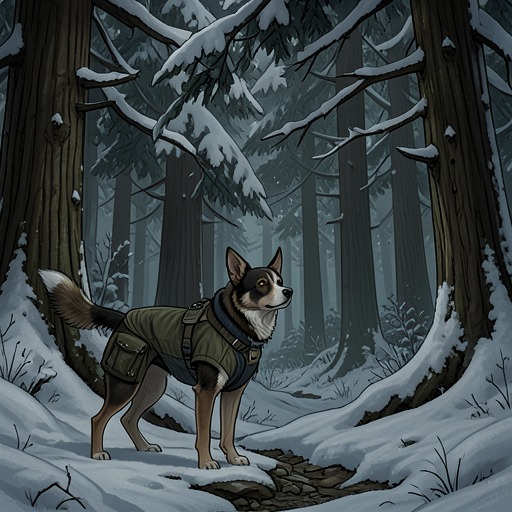
The same tension appears in Buck’s solitary pursuits. He enters the forest as a different creature from the dog his companions saw leaving camp: silent, shadow-like, able to crawl beneath cover and strike with the speed of a snake. He kills ptarmigan, rabbits, chipmunks, fish, and beaver for food, sometimes releasing squirrels only after enjoying their terror. He especially loves the dim twilight of summer midnights, when he reads the forest’s signs and sounds while searching for the mysterious thing that calls him. These actions show the call operating through bodily knowledge rather than conscious reasoning; Buck is impelled to follow, listen, stalk, and run before he can explain why.
The call also surfaces in collective hunting. During a chase after a snowshoe hare, Buck leads a pack of sixty dogs while other huskies join from a Northwest Police camp. He is not merely pursuing food as a trained sled dog; he is ranging at the head of a pack, driven by the bloodlust and joy of killing living meat with his own teeth. The hunt becomes an ecstasy in which ordinary self-awareness disappears and every muscle expresses life against the motionless snow and moonlit landscape. The call is therefore embodied as movement, appetite, speed, and the recovery of predatory identity.
Release After John Thornton’s Death
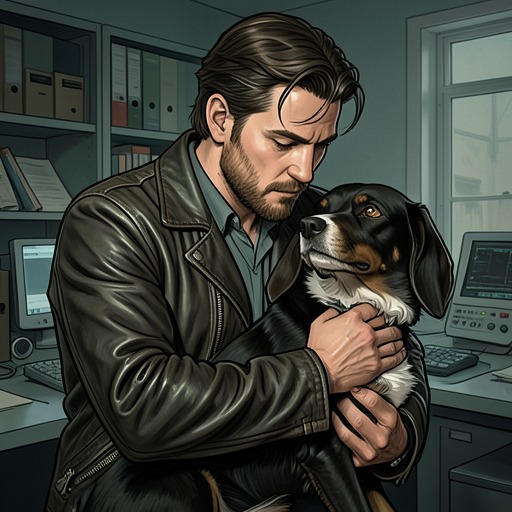
For much of Buck’s life with John Thornton, the call remains powerful but resisted. Deep in the forest it repeatedly draws him away from the fire and beaten earth, yet love for Thornton brings him back. Thornton alone holds him; other human beings may praise or pet him, but Buck remains emotionally cold toward them. His loyalty gives the call a limit, proving that the wild summons has not yet displaced the law of love and fellowship represented by Thornton.
That balance changes when the Yeehats attack and John Thornton dies. Buck knows death as the cessation of movement and understands that Thornton has passed away, leaving an aching void that food cannot fill. At night, while Buck mourns beside the pool, the familiar many-noted call returns more compellingly than before. The text makes the causal break explicit: Thornton is dead, the last tie is broken, and mankind no longer binds Buck. The expression consequently changes from a recurring temptation into an imperative that Buck is ready to obey.
The Final Answer and Meaning
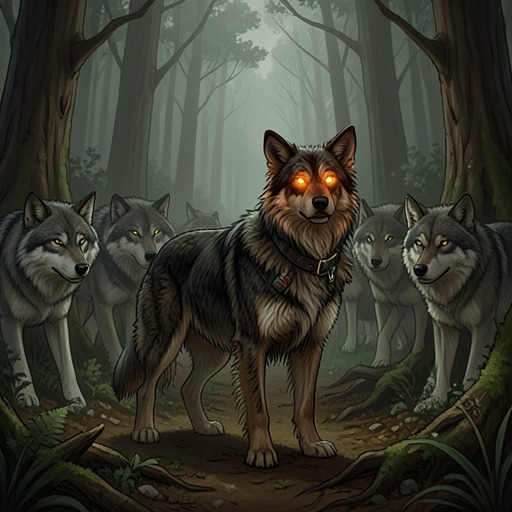
The wolf pack eventually enters Buck’s valley while hunting migrating moose. Buck waits in the moonlit clearing, defeats the wolves that attack him, and holds his ground until the pack withdraws. His earlier wild brother recognizes him, and an old, battle-scarred wolf approaches before beginning the long howl. The others join, and Buck answers. This collective response is the call’s final form: not a mysterious sound pursued by one unsettled animal, but a shared language through which Buck is accepted into the pack.
After the howl, Buck leaves his defensive position and runs with the wolves, side by side with his wild brother. The ending converts the expression into a rite of passage. Buck does not return to human society with a lesson for civilization; instead, he crosses permanently into the world the call has announced. Later, the Yeehats speak of a Ghost Dog leading the timber wolves, robbing traps, killing dogs, eluding hunters, and leaving tracks larger than those of any ordinary wolf. The call has thus produced not only personal freedom but a legend in which Buck becomes the feared emblem of the wilderness itself.
The expression’s significance lies in this double movement. It reaches backward toward ancestral memory and forward toward a new communal identity with the wolf pack. It competes with the violence of the law of club and fang, yet it is also fulfilled through that law’s physical demands: hunting, fighting, endurance, and the capacity to kill. Most importantly, it measures Buck’s changing attachments. While John Thornton lives, love answers the call and brings Buck home; after Thornton’s death, the call becomes the only remaining direction. The story ends when Buck no longer seeks to understand it and simply runs with it.